
News

Living organisms leave traces of DNA in the environment in the form of tiny cellular remnants. This makes it possible to detect animals and plants without actually seeing them. In order to pool their expertise in working with eDNA more effectively in future, Thünen staff have now set up a new…
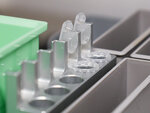
A component of a pipetting robot used for analysis.

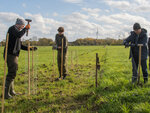
In early November, researchers and volunteers planted 800 new trees and shrubs in the "Hedge World" experimental field at the EiLT Landscape Laboratory. They will form part of a diverse hedge agroforestry system and be used for research by six Thünen Institute departments.

Several people are standing in a field and driving stakes into the ground.

Scroll to top